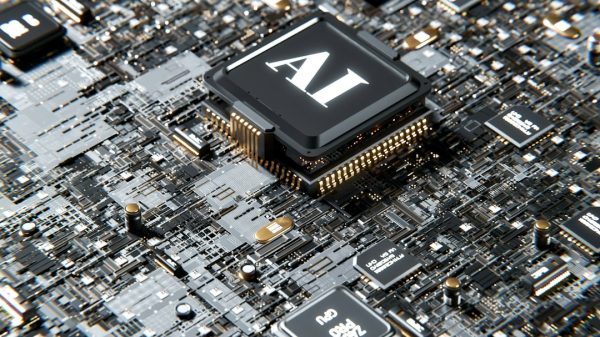





Today in the hardware and AI intersection, Pinea Pi, a hardware innovator focused on AI native capabilities, announced its plan to launch its first edge AI node on Kickstarter in late September. The move signals more than just a product debut; it highlights a new path for monetizing on-device intelligence and building a scalable business around edge computing.
The core tech story here is the edge AI node designed for the AI native generation. In plain terms, the device is meant to perform sophisticated AI tasks locally, without constantly pinging remote data centers. This promises lower latency, enhanced privacy, and greater reliability in environments with intermittent connectivity or strict data governance requirements. For developers and enterprises, such a device can become a reliable anchor for deploying, updating, and monetizing AI workloads at the edge, from industrial automation and smart buildings to field robotics and remote monitoring.
From a funding and revenue perspective, a Kickstarter launch is not only a marketing event but a practical pre-order and validation mechanism. Early backers provide capital to scale manufacturing and supply chain planning, while also signaling market demand to later-stage investors. For Pinea Pi, the campaign represents a twofer: it builds a community of early adopters who become evangelists and potential customers, and it creates feedback loops that can guide product iterations before a large production run.
The money making potential extends beyond the initial device sale. The true value in edge AI often lies in the software and services that ride along with the hardware. Potential revenue streams could include:
– On-device AI model licensing and subscription access to specialized inference engines tailored to sectors like manufacturing, healthcare, or logistics.
– Developer tools, SDKs, and marketplaces for custom models or apps that run efficiently on the node, generating ongoing royalties or revenue shares.
– Managed services and cloud-accelerated workflows that synchronize with edge deployments, enabling hybrid architectures while preserving on-device intelligence when needed.
– Hardware upgrades and modular expansion packs that unlock higher performance or new capabilities, creating a continuous product lifecycle and repeat purchases.
Market opportunity for edge AI devices is broad and rapidly expanding. Analysts and market watchers generally describe it as a multi-billion-dollar space on a growth trajectory, driven by demand for privacy preserving AI, real-time decision making, and reduced cloud egress costs. The frontier is especially pronounced in sectors that require autonomous or semi autonomous operation, data sovereignty, and resilient edge compute. If Pinea Pi can demonstrate clear advantages in performance, energy efficiency, and ease of integration, the addressable market widens to include tiered commercial customers, researchers, and government pilots alike.
Investors will be watching several milestones post-campaign. First, manufacturing scale and supply chain risk management will determine margins and time to market. Second, the ability to build and sustain a robust software ecosystem around the edge node will be critical to recurring revenue, which often outweighs the initial hardware margin. Third, strategic partnerships with semiconductor suppliers, cloud platforms, and system integrators could unlock co selling and co development opportunities, accelerating go-to-market velocity.
Financially, the model is compelling if executed well. Hardware margins on new devices can be tight at launch, but software and services typically offer higher long-term gross margins and stickiness. A successful Kickstarter could also catalyze follow-on funding rounds from venture investors who are keen on edge compute, AI acceleration, and the shift to AI-native architectures. For entrepreneurs, the lesson is clear: crowdfunding can de risk early stage product development, validate demand across global markets, and create a platform for recurring revenue through software and services built around a durable hardware offering.
In sum, Pinea Pi’s Kickstarter path for an edge AI node embodies a dual bet on breakthrough hardware design and a scalable software economy. If the device proves its value at launch and compounds through developer engagement and enterprise partnerships, it could help redefine how AI is deployed at the edge and unlock a new wealth creation engine for hardware-first AI startups.